
In the energy, petrochemical, and aerospace sectors in Mexico, asset integrity allows no margin for error. Operating in high-risk areas, such as refineries with high temperatures, offshore platforms, or areas with radiation, poses a critical challenge. Quality managers and integrity engineers face constant pressure to obtain ultra-precise data without unnecessarily exposing personnel or extending plant downtime.
The definitive solution lies in decoupling data acquisition from on-site analysis. By implementing a portable inspection ecosystem that integrates multi-technology equipment with specialized software platforms, industrial plants can conduct weld assessments and corrosion mapping with unprecedented safety and efficiency. The solution that ZION NDT puts at your fingertips allows you to control all this potential remotely, transforming the way you manage the reliability of your equipment.
The Evolution of NDT Inspection
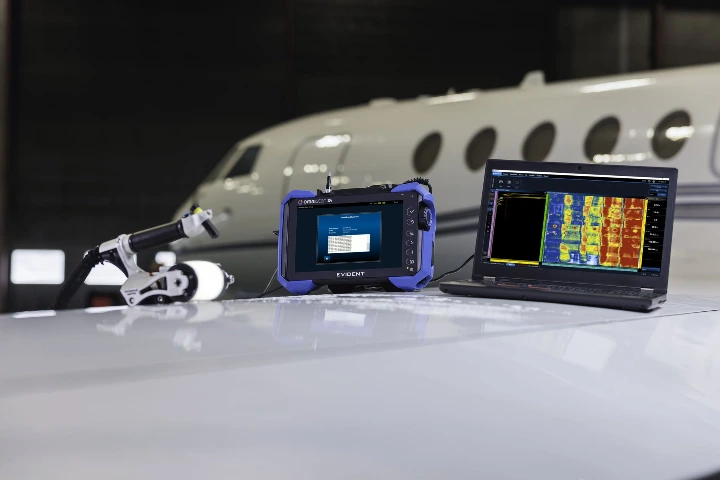
For years, technological evolution in non-destructive testing has sought to balance portability with processing power. Today, that synergy materializes by combining the OmniScan X4 flaw detector with the free OmniScan Black Box application. This application turns the equipment into a powerful blind acquisition unit that transfers information in real-time to a laptop, where the real analysis takes place.
How does OmniScan X4 technology work?
At the core of this solution is advanced PAUT and TFM analysis. Physically, Phased Array Technology (PAUT) uses probes with multiple piezoelectric crystals pulsed with precise time delays to sweep an ultrasonic beam. However, Total Focusing Method (TFM) and Phase Coherence Imaging (PCI) take acoustic physics a step further.
TFM captures the Full Matrix Capture (FMC) of each transducer element and processes it to acoustically reconstruct the area of interest grid by grid. The result is that acoustic energy is focused on each and every point of the inspected region, providing a true geometric representation of the defect, without the classic artifacts of traditional ultrasound.
Comparison: Traditional Workflow vs. Integrated OmniScan Ecosystem
Operational Parameter | Traditional Workflow (Stand-Alone) | OmniScan X4 + WeldSight Ecosystem (Black Box) |
Handling Heavy Files | Manual transfer via USB (takes time and there is a risk of corruption). | Direct and real-time data transfer to the PC. |
Analysis Environment | Equipment screen (10.6 inches), exposed to sunlight or industrial noise. | Multiple monitors in office or booth, advanced desktop tools. |
Reporting Speed | Sequential: First you acquire everything, then you interpret everything. | Parallel: You analyze parts while the team continues scanning. |
Inspection in Risk Areas | The level II/III inspector must stay with the team in the hot zone. | 100% remote operation; less exposure to gases, heights, or radiation. |
If your inspection volume exceeds 40-50 welds per shift or if you frequently operate in confined spaces, the Return on Investment (ROI) of migrating to the Black Box configuration is justified in the first few months, simply due to the drastic reduction in downtime and rework.
Acquisition Synchronization and
Advanced PAUT and TFM Analysis
To understand the impact of this ecosystem, it is vital to analyze how hardware and software communicate. The OmniScan Black Box application acts as a bridge through a programming interface for NDT devices. This allows the field equipment to be fully controlled by analytical-grade software installed on the PC, leveraging the superior processing power of the computer to render complex images without latency.
Depending on your industry, ZION NDT advises you on implementing the appropriate software platform:
WeldSight Software
for Oil & Gas and Petrochemicals
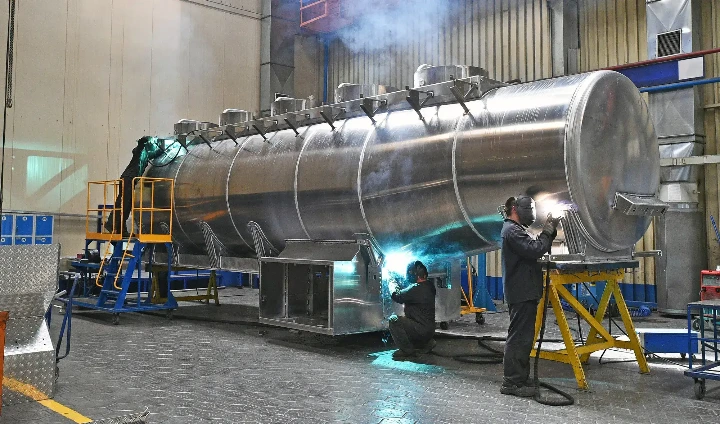
Specifically designed for the evaluation of complex welds and corrosion mapping. This software allows for data fusion or file stitching for large-scale inspections, such as pipeline networks or pressure vessels. It includes advanced corrosion analysis tools, signal-to-noise ratio calculations, and soft gain functions. This platform is ideal for identifying complex damage mechanisms typical in Mexican refineries.
AeroView Software
for the Aerospace Sector
Optimized for zero-degree inspections on composite materials. It facilitates workflow on carbon fiber parts or high-volume aerospace components. Its tools stand out for the D-scan view and time-corrected soft gain control, ensuring compliance with the industry's strictest quality standards.
Additionally, for research and development centers of new methodologies, the 64:128PR model allows for the recording and reading of raw datasets from full matrix capture. This gives specialists the freedom to reconstruct TFM images with custom patterns for applications outside the conventional standard.
Explore how these capabilities apply in real-world scenarios in our article onAdvances in Portable NDT Systems, where we analyze the accuracy of this technology.
Ecosystem Impact
Integrated into Industry
Technical Feature | Operational Benefit | Practical Impact in Mexico |
Remote control via OmniScan Black Box app | Eliminates the need to physically operate the equipment during acquisition. | Protects inspectors in offshore platforms or high-temperature areas, reducing risk premiums. |
Direct transfer to PC | Skips the manual export step of heavy data. | Accelerates decision-making during critical plant shutdowns, saving hours of operational downtime. |
Data fusion in WeldSight software | Combines multiple inspection files into a single continuous view. | Facilitates corrosion mapping in large stretches of land pipelines, delivering a unified report to the end customer. |
128-channel receiver models | Supports multiple beam configurations and simultaneous advanced techniques. | Ensures compliance with international codes required by auditors and integrity inspectors. |
Regulatory Compliance;
ASME, ASTM, ISO, and National Standards
The architecture of the OmniScan X4 and the analytical tools of WeldSight are calibrated to strictly comply with demanding international codes such as:
ASME Sección V
API 1104
Additionally, its level of precision provides you with full national support when you need to justify mechanical integrity assessments to comply with the following regulations:
NOM-020-STPS (pressure vessels and boilers)
NOM-009-ASEA (pipeline integrity).
Frequently Asked Questions (FAQs)
About Advanced Analysis and NDT Software
WeldSight is focused on the oil, gas, and petrochemical industries to assess welds and corrosion. AeroView is specifically dedicated to the aerospace industry for zero-degree inspections of composite materials.
It turns the OmniScan X4 into a high-power "slave." You can leave the equipment physically mounted on a hazardous pipe (high temperature, height) and control everything from a laptop in a safe area via a wired network connection.
Yes. WeldSight is equipped with analysis tools, gain calibration (TCG), and volumetric gates specifically designed to meet the reporting requirements of international standards, including ASME, API, and AWS.
By separating the acquisition unit from the control unit, the inspector can place the scanner and detector in the risk area, and then retreat to a safe distance to monitor the inspection in real-time from their computer, ideal for areas with radiation or toxic gases.
We invite you to connect with us at our next event
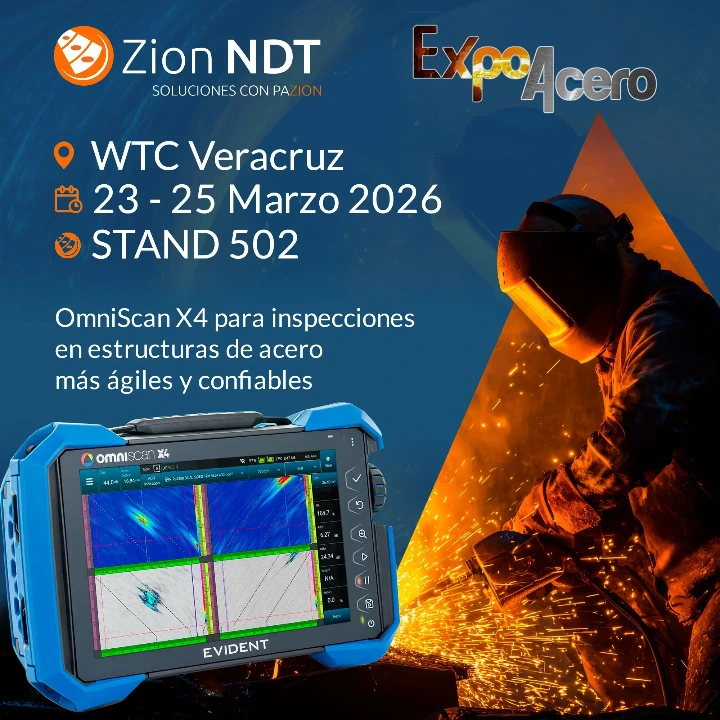
Expo Acero will take place from March 23 to 25, 2026, at the World Trade Center in Veracruz, the most important technical meeting of the steel industry in Latin America.
Discover how Zion NDT strengthens the regional industrial ecosystem by providing operational certainty through ultrasonic inspection technology and materials analysis. Anticipate failures, meet global standards, and protect the future of your facilities with accurate diagnostics.
Related team
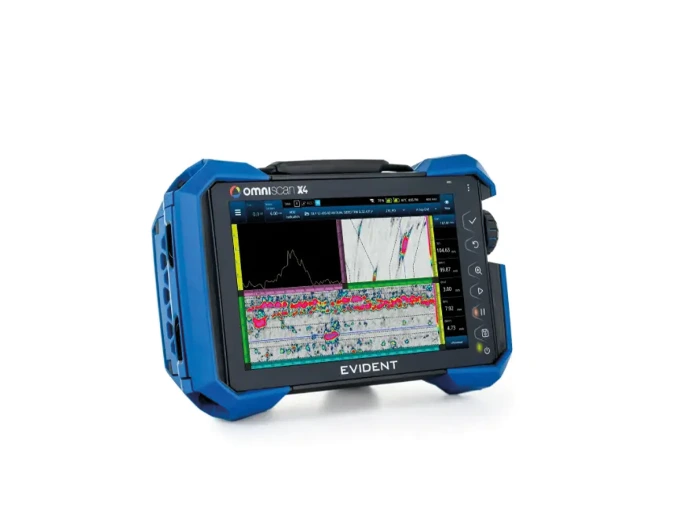
OmniScan™ X4
The detectorOmniScan™ X4combines multi-technology capabilities and high-speed data processing in a powerful unit. Thanks to its versatility in Phased Array and its TFM and PCI modes, it has exceptional performance.